By YU. This article breaks tapping down by material, pace, and recording style so beginners can understand why one tapping video feels pleasant and another feels harsh.
Tapping ASMR uses repeated fingertip sounds on objects such as books, boxes, glass, wood, makeup containers, keyboards, and phone cases. It is popular because it is simple, versatile, and easy to recognize. The same basic action can sound completely different depending on the surface, speed, microphone, and distance.
Why Tapping Works for Some Listeners
Tapping creates a pattern. When the pattern is slow and clear, the brain can follow it without much effort. That predictable detail can feel calming for some people. It can also create strong tingles because the sound is close and precise. However, tapping that is too fast or too loud may become irritating.
Common Tapping Materials
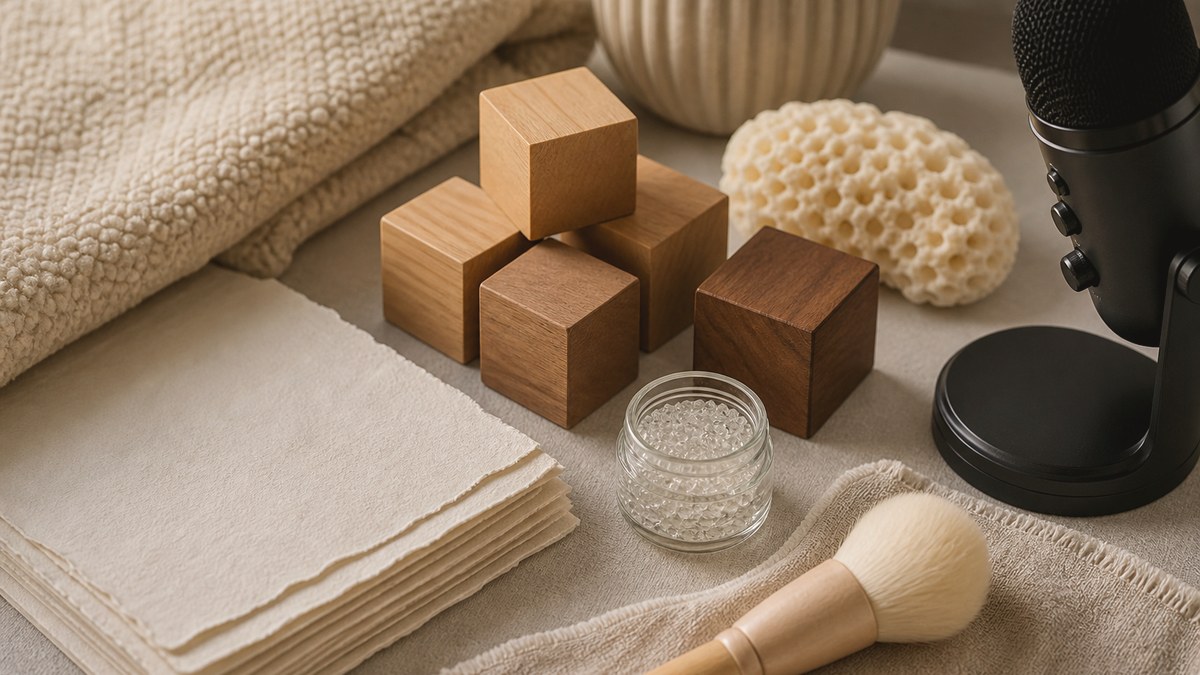
Wood tends to sound warm and hollow. Glass is brighter and sharper. Cardboard is softer and more muted. Plastic can be crisp, while leather or fabric gives a quieter texture. Trying different materials helps you learn whether you prefer deep, soft sounds or high, clicky sounds.
Choosing Better Tapping Videos
Look for videos with consistent volume, clean recording, and timestamps if you want to skip certain materials. Avoid videos with sudden loud object drops if you are listening before bed. If a creator layers tapping with whispering, check whether the voice helps you relax or keeps you too alert.
Creator Tips for Tapping ASMR
Creators should record test clips from several distances. Close tapping can be intense, while slightly distant tapping may be smoother. Use a stable table, avoid jewelry noise unless intentional, and leave quiet pauses between objects. The pause is part of the relaxation.
Material Changes Everything
Tapping is not one sound. Wood usually feels warmer and rounder, glass can be bright and sharp, cardboard is dry and soft, and plastic can sound hollow or clicky. A beginner who dislikes one tapping video may simply dislike that material or microphone distance. When testing tapping, compare materials before deciding whether the trigger is for you.
Good Tapping Has Restraint
The best tapping ASMR often leaves space between sounds. Constant fast tapping can become tense because the listener has no room to settle. Slower patterns, alternating hands, and occasional pauses usually feel calmer. For creators, this is a useful lesson: quiet timing can matter more than speed. A clean recording of simple taps is better than a busy recording full of table bumps.
A Useful Tapping Test
Tapping changes dramatically by surface, so test the material before judging the whole trigger.
- Compare wood, cardboard, glass, and plastic at the same volume.
- Choose slower tapping if fast patterns make your shoulders tense.
- For recording, leave pauses so the sound has room to settle.
Tapping Questions
Why do I like some tapping and hate other tapping?
Material, speed, microphone distance, and volume can change the sound completely.
What tapping material is gentlest?
Cardboard, fabric-covered objects, or softer wood are often easier than glass or hard plastic.
Start With Softer Surfaces
Good tapping ASMR depends on pace, material, and volume. Start with softer surfaces if sharp tapping makes you tense.
Related Guides in ASMR Triggers
 ASMR Triggers
Quiet ASMR Triggers for Bedtime: Gentle Ideas That Do Not Feel Too Busy
Bedtime ASMR works…
 ASMR Triggers
Whispering vs Soft Speaking ASMR
Understand the dif…
 ASMR Triggers
Best ASMR Sounds for Stress Relief
A practical guide …
 ASMR Triggers
Best ASMR Triggers for Sleep
Explore gentle ASM…