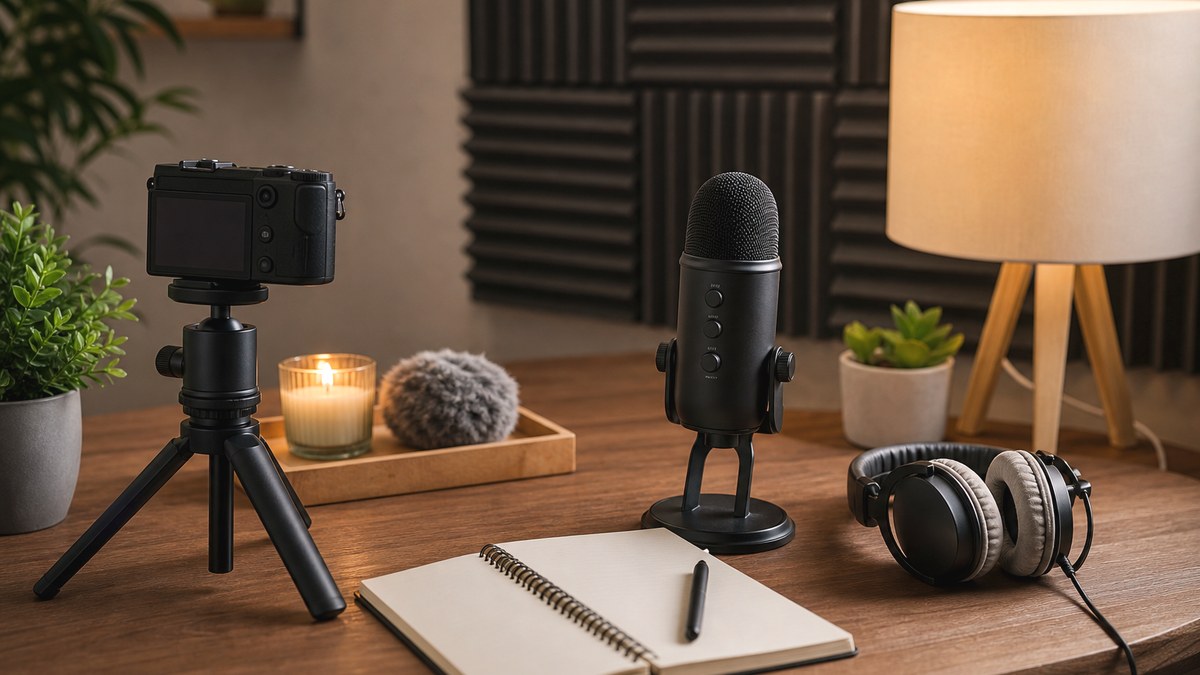
By YU. This microphone guide is for new creators who want clearer audio but still need to understand room noise, gain, and handling before buying more gear.
A microphone can improve ASMR quality, but it is not magic. A good mic in a noisy room will still sound noisy. Beginners should think about recording environment, microphone type, budget, and ease of use together. The best first microphone is the one that helps you record consistently and learn what your audience enjoys.
Start with the Room
Before buying gear, record a test in your quietest space. Listen for air conditioning, computer fans, street noise, and echo. Soft curtains, blankets, rugs, and distance from hard walls can improve sound. Many beginner creators get a bigger quality jump from room control than from a more expensive microphone.
USB Microphones
USB microphones are popular because they connect directly to a computer and usually require less setup. They are good for soft speaking, tapping, and simple roleplay. Look for gain control, headphone monitoring, and stable desk placement. A shock mount or soft surface can reduce table bumps.
Lavalier and Phone Options
A lavalier microphone can work for close voice recordings, especially if you already film with a phone. Phone audio can also be acceptable for early tests if the room is quiet. The limitation is that phone mics may pick up handling noise and may not capture stereo detail as well as dedicated setups.
Binaural and Stereo Setups
Binaural microphones create strong left-right movement and can be excellent for immersive ASMR. They are not required for beginners. If you are still learning your niche, start simple. Upgrade when you know which triggers you want to record and what your viewers respond to.
Do Not Buy Gear Before Testing the Room
Many beginner recordings sound rough because of the room, not the microphone. Fans, refrigerators, hard walls, laptop noise, and table bumps can make a decent mic sound bad. Before buying, record the same trigger in three positions: near curtains, near a closet, and at your normal desk. The quietest position may improve the recording more than a new mic.
A Sensible First Upgrade
A simple USB microphone can be enough for early ASMR if it lets you control gain and stay close without distortion. Binaural microphones are interesting, but they are not required for beginner videos. Spend time learning distance, handling noise, and levels first. Better technique makes every future microphone more useful.
The Room Test Comes First
A new microphone cannot fix every noisy room problem.
- Record the same trigger near curtains, a closet, and your normal desk.
- Listen for fan noise, desk bumps, and echo.
- Upgrade only after you know what problem the microphone needs to solve.
Microphone Questions
Is a binaural microphone required?
No. A simple USB mic can be enough for early practice.
What should I fix before buying gear?
Room noise, gain, desk bumps, and microphone distance.
Upgrade After the Room Test
A beginner microphone should make recording easier, not more complicated. Room control and careful levels still matter most.
Related Guides in ASMR Gear
 ASMR Gear
How to Reduce Background Noise for ASMR Recording
Room noise, gain, …
ASMR GearDo You Need Expensive Gear for ASMR?
Expensive ASMR gea…
ASMR GearSimple ASMR Recording Setup for Small Rooms
A small-room ASMR …
ASMR GearHow to Reduce Background Noise for ASMR Recording
Room noise, gain, …