By YU. This guide focuses on practical ASMR listening and creator decisions with careful wording and realistic expectations.
Expensive gear can improve ASMR recordings, but it does not automatically make a video relaxing. A costly microphone will still record a loud fan, rough handling, harsh tapping, and rushed pacing. Before spending more, it helps to know what problem you are actually trying to solve.
What Better Gear Can Improve
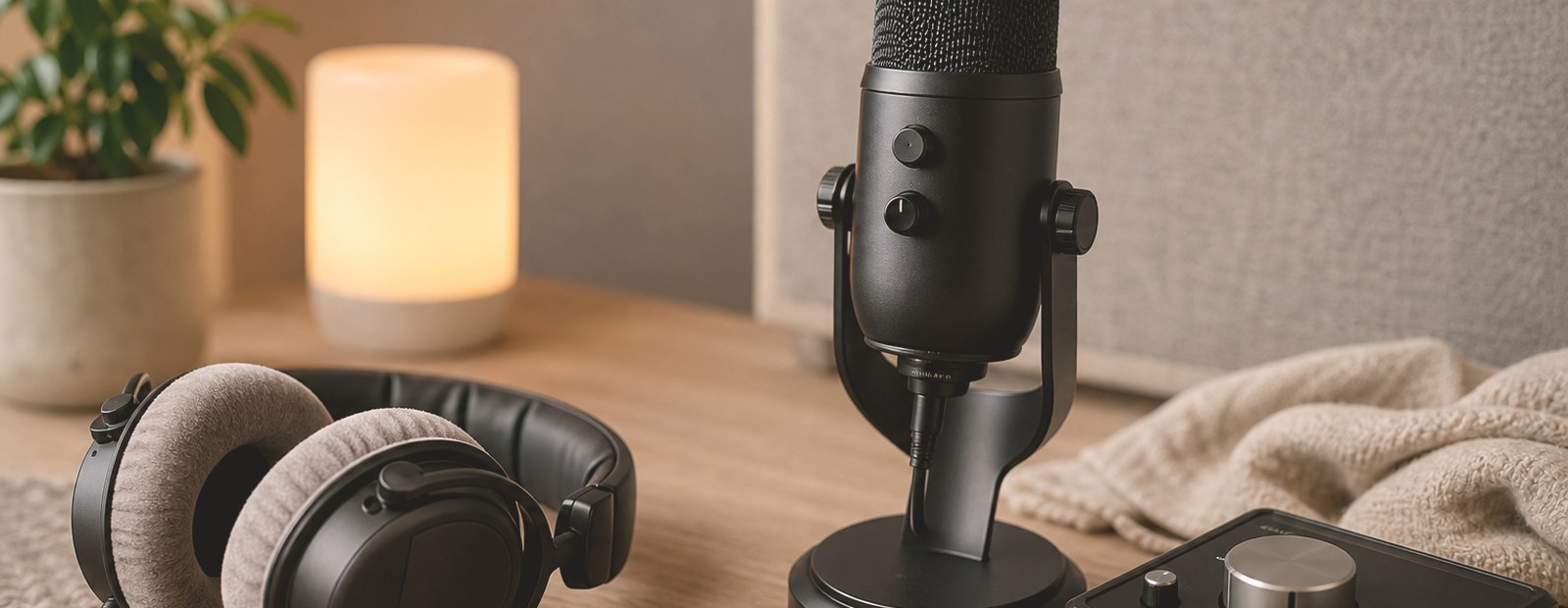
A better microphone may capture softer detail, reduce self-noise, and make whispers or brushing sound smoother. Better headphones can help you catch mouth noise, desk bumps, and sudden peaks before publishing. A stable stand can reduce vibration. These upgrades are useful when they solve a specific problem.
What Gear Cannot Fix
Gear cannot fix a noisy room by itself. It cannot make a rushed video feel slow, or make uncomfortable roleplay feel personal. It also cannot replace listening back with care. Many beginner ASMR videos improve more from lower gain, slower hand movement, and a short test recording than from a large purchase.
A Sensible Upgrade Order
First control room noise and mic distance. Second, use headphones to check the recording. Third, improve stability with a stand or shock mount if needed. Only then consider a new microphone. This order keeps spending tied to real problems instead of product hype.
When Spending More Makes Sense
Upgrade when you can name the issue clearly: hiss at normal gain, poor stereo image, handling vibration, or inconsistent recording levels. If you cannot name the issue yet, keep recording with simple gear and collect listening notes. Experience makes gear choices much easier.
Practical Takeaway
Keep the routine practical, comfortable, and honest. ASMR is most useful when it fits the listener rather than forcing a result.
Related Guides in ASMR Gear
ASMR GearHow to Reduce Background Noise for ASMR Recording
Room noise, gain, …
ASMR GearSimple ASMR Recording Setup for Small Rooms
A small-room ASMR …
ASMR GearHow to Reduce Background Noise for ASMR Recording
Room noise, gain, …
ASMR GearUSB vs XLR Microphones for ASMR Beginners
A practical beginn…