
By YU. This guide focuses on practical ASMR listening and creator decisions with careful wording and realistic expectations.
Introduction
Most people discover ASMR through a single video. Maybe it is whispering, tapping, personal attention, hair brushing, rain sounds, or a creator with a voice that feels unusually calming. For a few nights, it works beautifully. Then the search begins: another video, another trigger, another playlist, another perfect sound.
That search can become the opposite of relaxation.
A better ASMR sleep routine is not built around finding one magic video. It is built around a simple system: choose calm triggers, keep the volume comfortable, reduce screen interaction, use a timer, and track what actually helps.
This 30-day plan is designed for ordinary listeners. It does not treat ASMR as medical care or a guaranteed sleep fix. It treats ASMR as a gentle wind-down tool that may support a calmer evening when used carefully.
Before You Start: Set the Right Expectation
ASMR is not a command that makes the body sleep. It is a cue. A cue works best when it is consistent, low-pressure, and connected to a wider routine.
Your goal for the next 30 days is not "fall asleep instantly." That goal creates pressure. Use a better goal:
"Make the last 30 minutes of the night calmer and easier to repeat."
That is something you can actually build.
The Three Rules
Use these rules for the whole plan.
First, keep the volume low. ASMR should not need to be loud to be useful. If you are turning it up to chase every detail, switch to a clearer or simpler track.
Second, choose before bed. Searching in bed is a trap. Pick the video or audio before you are under the blanket.
Third, use a timer. A 20 to 45 minute timer is enough for most nights. The point is to wind down, not run a playlist until morning.
Week 1: Find Your Baseline
The first week is for observation. Do not try to optimize everything. Choose one ASMR session per night and take a short note afterward or the next morning.
Test these four categories:
- soft speaking
- whispering
- no-talking triggers
- personal attention
Use similar conditions each night: same device, similar volume, similar time. If you change everything at once, you will not know what helped.
Week 1 Journal
Use this format:
Trigger:
Video length:
Volume:
Headphones or speaker:
Did I keep watching?
Did I feel calmer?
Would I use this again?
You are looking for patterns, not perfection.
Week 2: Build a Shortlist
In week 2, stop exploring widely. Pick the best two or three categories from week 1 and test them again.
If whispering felt too intense, remove it. If no-talking brushing made the room feel calmer, keep it. If personal attention was relaxing but too interesting, save it for daytime and choose something simpler at bedtime.
Your week 2 goal is a shortlist:
- two bedtime-safe videos
- one backup video
- one no-talking option
- one speaker-friendly option
This shortlist becomes your routine library.
Week 3: Reduce Screen Friction
Many ASMR sleep routines fail because the screen stays central. You start by choosing one video, then read comments, check recommendations, compare thumbnails, and open five more tabs. That is not a wind-down. That is browsing.
In week 3, create boundaries:
- choose the video before entering bed
- turn brightness down
- avoid comments
- put the phone face down after the first minute
- switch videos only once
The "switch once" rule is useful. It lets you escape a bad choice without turning the night into a search session.
Week 4: Make the Routine Repeatable
By week 4, the routine should feel boring in a good way.
Try this structure:
- Five minutes before bed: choose the ASMR session.
- In bed: start at low volume.
- First minute: check for sudden loud sounds or ads.
- Set timer: 30 minutes.
- Put the screen away.
- Let the sound become background.
If you are still awake when the timer ends, do not automatically restart the video. Pause and check what you need. Sometimes you may want silence. Sometimes you may want a shorter backup track. Sometimes you may need to get out of bed briefly and reset.
Choosing the Right Trigger for Each Night
Different nights need different textures.
For a mentally busy night, try soft speaking with a simple topic. It gives your mind a calm thread to follow.
For physical restlessness, try slow brushing or fabric sounds. Repetitive texture can feel grounding.
For loneliness or emotional heaviness, try gentle personal attention. Choose a low-drama video that feels caring without becoming too engaging.
For overstimulation, try no-talking ASMR or rain with very light triggers. Language may keep your brain active.
For a night when everything irritates you, skip ASMR. A good routine includes permission to stop.
Headphones, Speakers, and Comfort
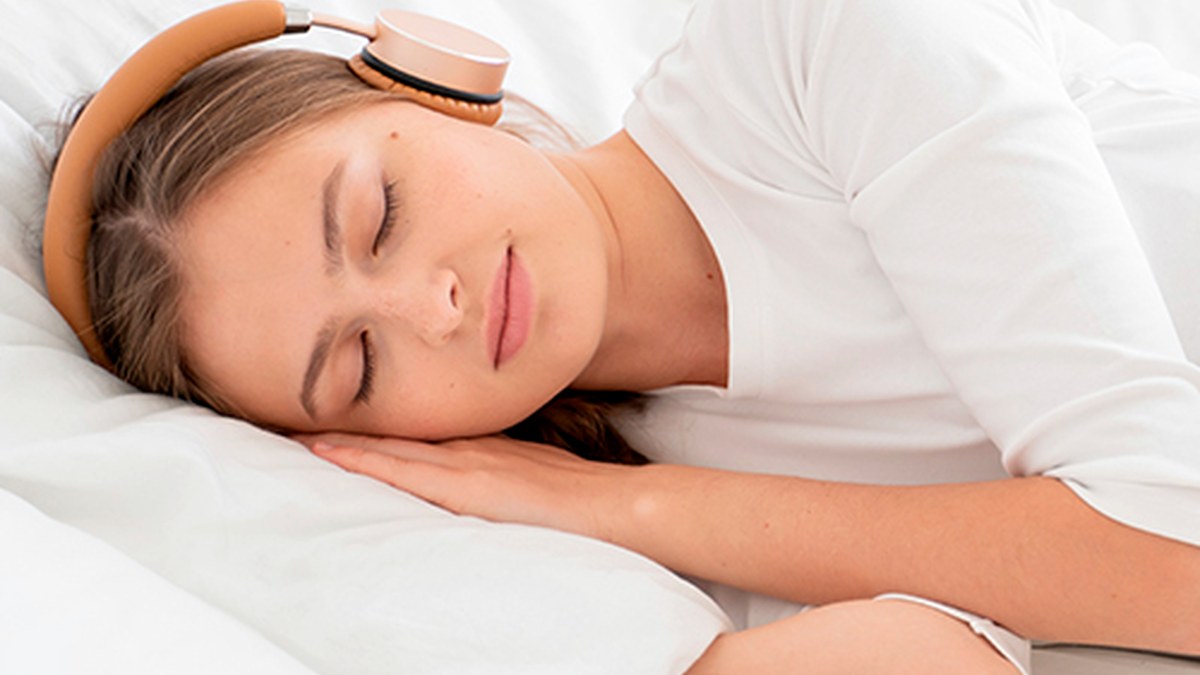
Headphones make ASMR intimate, but they are not always the best bedtime choice. If earbuds press into your ears, if cables bother you, or if binaural movement feels too intense, use a speaker.
A small speaker at low volume can make ASMR feel less demanding. You lose detail, but that may help sleep. The sound becomes part of the room instead of something happening inside your head.
If you use headphones, keep the volume gentle and avoid sleeping with uncomfortable pressure. Comfort is part of the routine.
Safe Listening Habits
ASMR listeners sometimes raise volume because whispers are quiet. That is understandable, but not a good long-term habit.
Use these safety checks:
- If a sudden tap feels sharp, lower the volume.
- If your ears feel tired, stop.
- If room noise makes you raise the volume, try noise isolation or a speaker closer to the bed at a lower level.
- If you use playlists, keep them short.
- Do not treat all-night headphone playback as the default.
Safe listening is especially important because ASMR can be long-form. A single video may be 30 minutes to two hours.
Troubleshooting
Problem: I keep searching for the perfect video.
Fix: Make a five-video bedtime playlist and only use that playlist for one week.
Problem: I like ASMR but it keeps me awake.
Fix: Choose no-talking videos, reduce screen use, and avoid complex roleplays at bedtime.
Problem: I do not feel tingles.
Fix: Stop chasing tingles. Track calm, comfort, and reduced mental noise instead.
Problem: Whispering annoys me.
Fix: Try soft speaking, page turning, fabric sounds, or low tapping.
Problem: I wake up with audio still playing.
Fix: Use a timer every night. If the platform does not have one, use a device-level timer or shorter videos.
The 30-Day Checklist
Days 1-3: Test soft speaking, whispering, and no-talking triggers.
Days 4-7: Test personal attention, brushing, page turning, and light tapping.
Days 8-10: Remove triggers that irritated you.
Days 11-14: Repeat the best two trigger types.
Days 15-18: Build a five-video bedtime playlist.
Days 19-21: Use the playlist without browsing recommendations.
Days 22-24: Test headphones vs speaker.
Days 25-27: Set a consistent timer and volume.
Days 28-30: Keep only the routine you would actually repeat.
What Success Looks Like
Success is not dramatic. It may look like:
- you stop scrolling sooner
- you use lower volume
- you know which triggers to avoid
- you have a reliable bedtime playlist
- you feel less pressure to find new videos
- your evening feels quieter
That is enough.
Final Notes
The best ASMR sleep routine is simple, personal, and repeatable. It does not depend on one perfect creator or one perfect trigger. It depends on noticing what helps you feel calmer and removing what makes the night busier.
Use ASMR gently. Keep the sound comfortable. Let the routine become familiar. If a night calls for silence instead, listen to that too.
Sources and Further Reading
- Peer-reviewed ASMR study on affect and physiology: https://journals.plos.org/plosone/article?id=10.1371/journal.pone.0196645
- University of Sheffield research summary on ASMR and relaxation: https://www.sheffield.ac.uk/news/nr/asmr-research-relaxing-tingles-health-benefits-1.787443
- WHO Make Listening Safe initiative: https://www.who.int/activities/making-listening-safe
- WHO safe listening devices and systems toolkit: https://www.who.int/publications/i/item/toolkit-for-safe-listening-devices-and-systems
- CDC/NIOSH noise and hearing loss prevention: https://www.cdc.gov/niosh/noise/
Related Guides in Sleep & Relaxation
Sleep & RelaxationLow-Volume ASMR Listening Habits for a Calmer Night
ASMR does not need…
 Sleep & Relaxation
How Long Should You Listen to ASMR Before Sleep?
A practical guide …
 Sleep & Relaxation
ASMR for Study and Focus
Learn how some peo…
 Sleep & Relaxation
How to Build a Relaxing Night Routine with ASMR
Build a simple ASM…