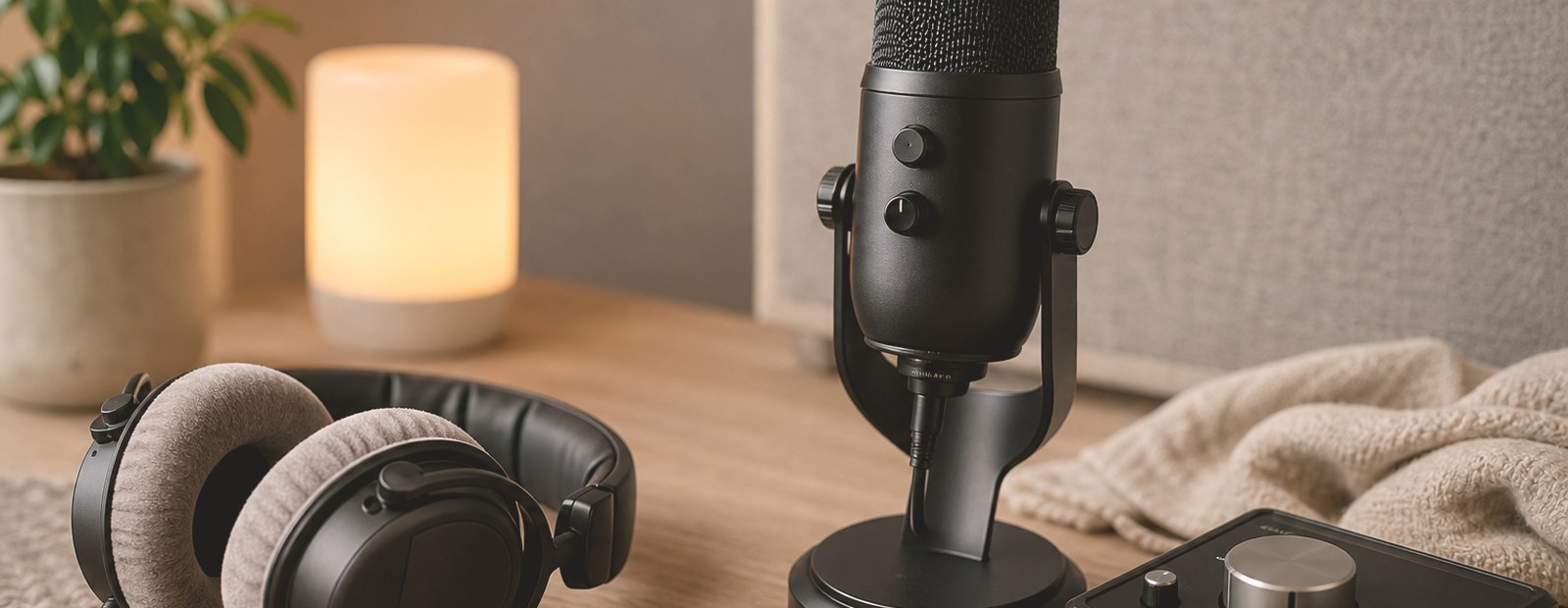
By YU. This guide focuses on practical ASMR listening and creator decisions with careful wording and realistic expectations.
Microphone advice can get confusing fast because creators often talk about gear as if every beginner is building a studio. For ASMR, the first question is simpler: can you record a quiet trigger clearly, repeat the setup next week, and listen back without harsh hiss or room noise?
Start With the Recording Situation
A USB microphone is usually easier for a new ASMR creator because it plugs directly into a laptop and needs fewer parts. That matters if you are still learning microphone distance, gain, and how loud your room sounds at night. An XLR microphone can be more flexible, but it also needs an audio interface, extra cables, and more setup decisions.
Where USB Makes Sense
USB works well for soft speaking, simple tapping, page turning, and personal attention videos recorded at a desk. Keep the mic close enough that you do not need high gain, place it on a stable surface, and record a one-minute test before filming. If the test already sounds clean through headphones, you do not need to upgrade immediately.
Where XLR Can Help
XLR becomes useful when you know exactly what problem you are solving: lower noise, better control, multiple microphones, or a more permanent setup. It is not a magic fix for room echo or loud handling. If your desk shakes, your fan runs, or your gain is too high, an expensive XLR chain will still capture those problems.
A Simple Buying Rule
Choose USB if you want to start this week with fewer parts. Consider XLR later if you have made several videos, know your room limitations, and want a setup you can grow into. For AdSense-style content and beginner readers, this honest comparison is more useful than a list of expensive products.
Practical Takeaway
Keep the routine practical, comfortable, and honest. ASMR is most useful when it fits the listener rather than forcing a result.
Related Guides in ASMR Gear
ASMR GearHow to Reduce Background Noise for ASMR Recording
Room noise, gain, …
ASMR GearDo You Need Expensive Gear for ASMR?
Expensive ASMR gea…
ASMR GearSimple ASMR Recording Setup for Small Rooms
A small-room ASMR …
ASMR GearHow to Reduce Background Noise for ASMR Recording
Room noise, gain, …